B
bckcatalog
MediaG+ SleeveM
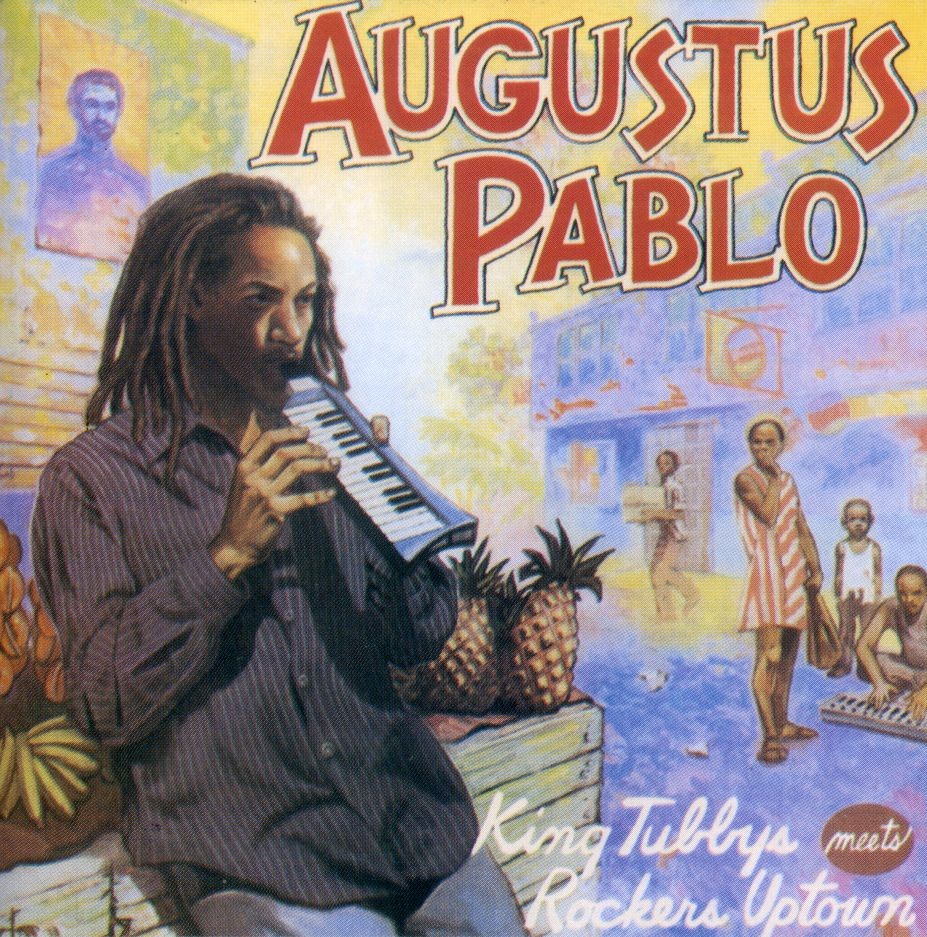 SHANACHIE · SH 45059
Catalog number is "SH 45059" on both spines and back cover, but "45059" on disc art. ℗ 2003 Shanachie Entertainment Corp. on back cover. ℗ 2004 Shanachie Entertainment Corp. on disc face. Tracks 13-16 are deluxe edition bonus tracks. Tracks 8 & 9 are mistitled: Track 8 = Corner Crew Dub Track 9 = Say So Packaging: standard plastic jewel box case, off-black tray, 8 page fold-out cover booklet. Housed in outer cardboard slipcase. May have a red hype sticker quoting Mojo Magazine: "Deluxe Edition of all-time dub classic w/four rare bonus tracks! - One of the 50 greatest reggae albums of all time". Total time: 48:54 (Complete Liner Notes): The creation of dub music was one of those inexplicable "great leaps forward" that resulted in a whole new art-form. Simply put, dub is a re-imagining of existing music through re-mixing and, sometimes, overdubbing. Dub mixes emphasize the rhythm as well as sonic textures of a recording, rather than the melody. The variations in rhythm and sonic textures create a whole different musical story, which refers to the original music. It was simply not possible before the era of multi-track recording as it's created by manipulating studio equipment to shape previously recorded tracks. Thus it is quintessential electronic music but more importantly dub was the first electronic music to penetrate the pop music world on an ongoing basis. It's impact on many different styles of music has been huge; contemporary dance music, hip-hop and the so-called "electronica" genre would be unthinkable without it. PABLO AND THE DUB REVOLUTION It's generally accepted that dub was created by King Tubby in Kingston, Jamaica in the late Sixties. A technical wizard, Tubby was an engineer, producer and sound system operator with his own studio. His expertise led many producers to bring recordings to him for a final mix. One day, while working on a two-track mix for producer Duke Reid, Tubby dropped out the voice for most of the recording; it sounded strangely exciting to have the voice at the beginning of the record and then drop out to leave the bare rhythm track. He carried some acetates of this mix to a dance and the reaction was over whelming. As a result, it became commonplace to create dub versions of songs for the flip-sides of singles; though others, most notably Lee "Scratch" Perry and Augustus Pablo produced stunning dub music. Tubby was the acknowledged master. Dub was a whole new way of looking at music. Augustus Pablo, born Horace Swaby, was a teenager in the late Sixties, a musical prodigy who played all keyboard instruments, including melodica, which he played as a serious instrument. Hanging around Kingston studios, he soon got a chance to play on numerous sessions as his talent became recognized. Indeed his nom-de-plume was bestowed on him by producer Herman Chin-Loy in recognition of his ability. Pablo began producing his own recordings and, like so many producers, went to King Tubby's studio to have them mixed. A very special chemistry developed between Tubby and Pablo. Pablo and Tubby's musical sensibilities meshed in a very creative and powerful way. As legendary reggae bassist Robbie Shakespeare noted about a seminal Pablo creation, "Cassava Piece", on which he played, "the way Pablo and Tubby mixed that was very special. There was no other record quite like it." Pablo had many talents. In addition to his obvious instrumental abilities he had a tremendous ear for rhythms. He had an uncanny ability to select and re-work classic rhythms from Studio One or other vintage reggae recordings but he also had a special ability to inspire session musicians to create powerful new rhythms. Although less important on his dub records, Pablo also had a marvelous melodic sensibility and on his purely instrumental productions (such as his classic "East of The River Nile") created haunting, memorable melodies which appeared in evocative snatches on dub versions of these productions. Most important, Pablo's creativity was informed by a great spiritual conciousness as a devout follower of Rastafari. He attributed his work to divine inspiration and the intent of his creation was to evoke a higher conciousness. This resulted in his "Far East" sound as well as the indefinable magic that so many of his recordings both dubs and instrumental works had. Frequently he credited His Imperial Majesty Haile Selassie as the producer on his records. The single "King Tubbys Meets The Rockers Uptown" was released in 1975 and caused an immediate sensation. This unique dub creation was a version of Pablo's production of "Baby I Love You So" by teen-aged prodigy Jacob Miller who went on to become one of Jamaica's greatest vocalists before his untimely death in his twenties. "Baby I Love You So" is powerful, driving rockers reggae but "King Tubby Meets The Rockers Uptown" shows just how much a great dub version can accomplish. Spectral, echo-ey snatches of Miller's vocal weave in and out of the mix as different instruments swoop up and down, highlighting a drum lick at one moment and a guitar skank the next. The rest of King Tubbys Meet Rockers Uptown is a grand tour of fantastic Pablo rhythms dubbed into magnificence. Pablo rarely resorted to such gimmicks as sound effects in his dubs; his approach was always masterfully thought-out and musicianly. On this deluxe version of "King Tubby's Meets The Rockers Uptown", the twelve original tracks are augmented by four rare bonus tracks which were initially only released on Jamaican singles, on Pablo's own labels such as Rockers, Hot Stuff, Message or Yard, but which nonetheless are based on rhythms used on other tracks from "Rockers Uptown." "Black Gunn" is another version of "Keep On Dubbing", whose rhythm track was used for Jacob Miller's "Keep On Knocking." "1 Ruthland Close" is another take on 555 Dub Street, itself a re-working of "555 Crown St" which sports one of the most unique and spooky rhythms ever created. "Silent Satta", like "Satta Dub" finds Pablo tackling the prodigious rhythm of The Abysinnians' "Satta Amasagana". "1-2-3 Version" re-works the immortal "Cassava Piece", itself the basis for the King Tubbys Meets Rockers Uptown title track. All in all, this album is not only one of "the fifty greatest reggae albums ever recorded", as Mojo Magazine has declared; it is one of the cornerstones of contemporary music. Listen to it with the volume cranked, with plenty of watts in your amp and big speakers to handle the bass. Some music may lose it's charm at high volume; "King Tubby Meets The Rockers Uptown" just seems ever more monumental! --Randall Grass